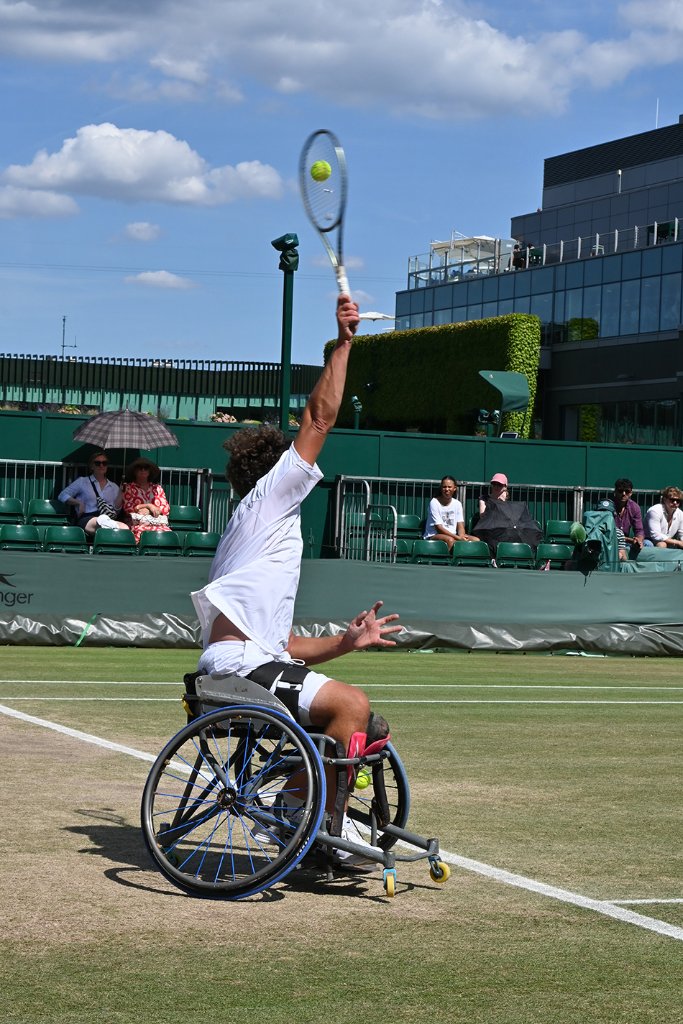
The two-bounce rule
In able-bodied tennis, a ball that bounces twice loses you the point. In wheelchair tennis, the second bounce is legal — and it is allowed to land outside the court altogether. That single change is what turns a game built around footwork into a game built around positioning, chair control and anticipation.
A player reads where the ball will land, turns the chair, and arrives in time to play it on the first or second bounce. Because the second bounce can be anywhere, deep and wide shots are punished differently: a ball that would be a clean winner in the able-bodied game can be chased down and returned.
Two rules keep the game in balance. The serve must land in the service box on the first bounce, and a player may push their chair only twice between strokes — so the chair cannot simply be used to cover the whole court.
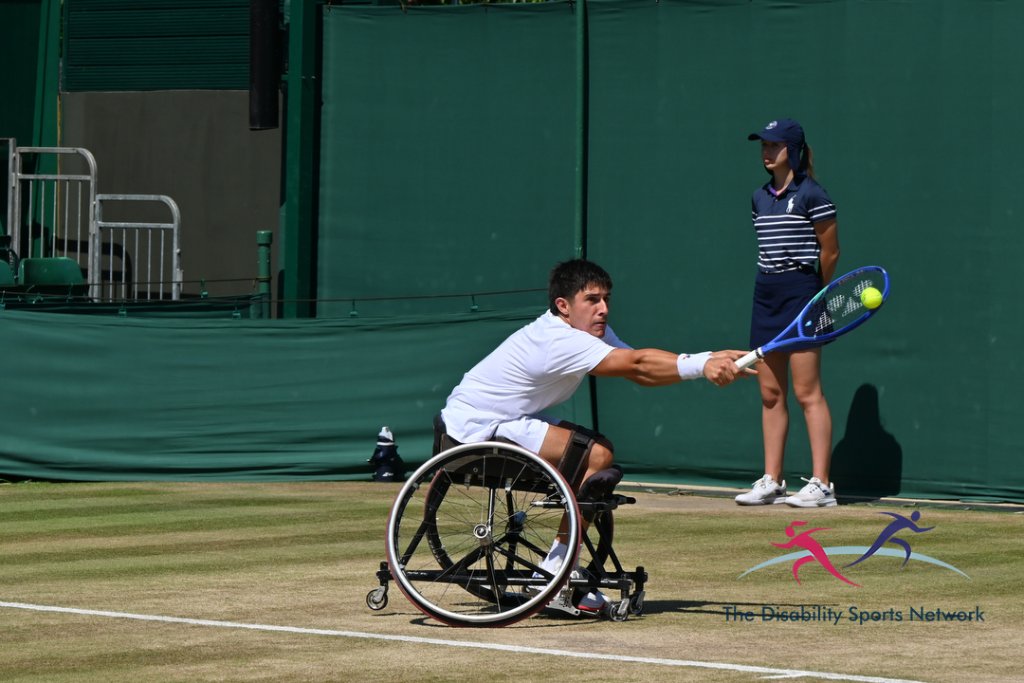
Open and Quad
Open division. For players whose impairment affects the legs, with full use of their arms. Men's, women's and doubles draws are played on the professional tour and at the Grand Slams.
Quad division. For players with an impairment in three or more limbs, which affects the hands as well as the legs. Players commonly tape the racket to the hand, and chairs have a different setup to compensate for reduced grip and reach.
How the sport began
Wheelchair tennis started in California in 1976, when Brad Parks began playing tennis from a wheelchair and found that the two-bounce rule made the game genuinely competitive. What began as rehabilitation became a sport in its own right, spread across Europe in the 1980s, and was a demonstration event at the Seoul Paralympics in 1988 before becoming a full medal sport at Barcelona in 1992.
Today the professional game runs on the ITF's UNIQLO Wheelchair Tennis Tour, and all four Grand Slams stage wheelchair draws — Wimbledon since 2005. The result is a small, elite field that competes on the biggest courts in the sport.
How to watch it
At Wimbledon, the wheelchair events are played in the second week of the Championships, after the able-bodied finals — often on the show courts, and always in front of a crowd that arrives expecting an exhibition and leaves as a fan. The other three Slams stage wheelchair draws too, and the Paralympics brings the sport to a global audience every four years.
The same etiquette applies as in the rest of tennis: quiet during points, applause between them. What surprises newcomers is the pace — the chair is not a limitation to work around, it is the engine of the movement.
Common questions
Can the ball bounce more than once?
Yes — that is the rule that makes the sport work. The ball may bounce twice before a player returns it, and the second bounce is allowed to land outside the court. The serve is the exception: the ball must land in the service box on the first bounce.
Is the court a different size?
No. The court, net, ball and racket are the same as in able-bodied tennis. The chair is part of the athlete, so the tactics change but the playing area does not.
What is the difference between Open and Quad?
Open players have an impairment affecting the legs, with full use of their arms. Quad players have an impairment in three or more limbs, and commonly tape the racket to the hand so it cannot slip.
When can I watch it?
The wheelchair events at Wimbledon are played in the second week of the Championships. Wheelchair tennis is also a full medal sport at the Paralympics and runs its own professional tour season, so there is competitive tennis almost all year.